


SEARCH FOR SPECIFIC ANIMAL PATIENTS
Mote’s Sea Turtle & Marine Mammal Rehabilitation Hospital provides state-of-the-art critical care and chronic care for sea turtles and marine mammals. They work closely with Mote’s Stranding Investigations Program in response to stranded turtles and marine mammals. The hospital’s mission is to rehabilitate these animals and return them to the marine environment, while gaining information that will expand knowledge of the biology, disease processes and veterinary care of these animals.
Mote’s rehabilitation work builds on decades of expertise through its animal rehab hospital, which has treated 74 dolphin and whales, 952 sea turtles, and tens of thousands of sea turtle hatchlings during nesting seasons. And its Stranding Investigations Research Program, which has responded to more than 800 stranded marine mammals since 1985 and 1,400 sea turtles since the 1990s.
Mote’s programs operate under federal permits and focus on the rescue, rehabilitation, release, and scientific investigation of marine animals to improve conservation outcomes for wild populations.
You can support this vital work by becoming a Mote Change Maker. Learn more at mote.org/donate
Program Details
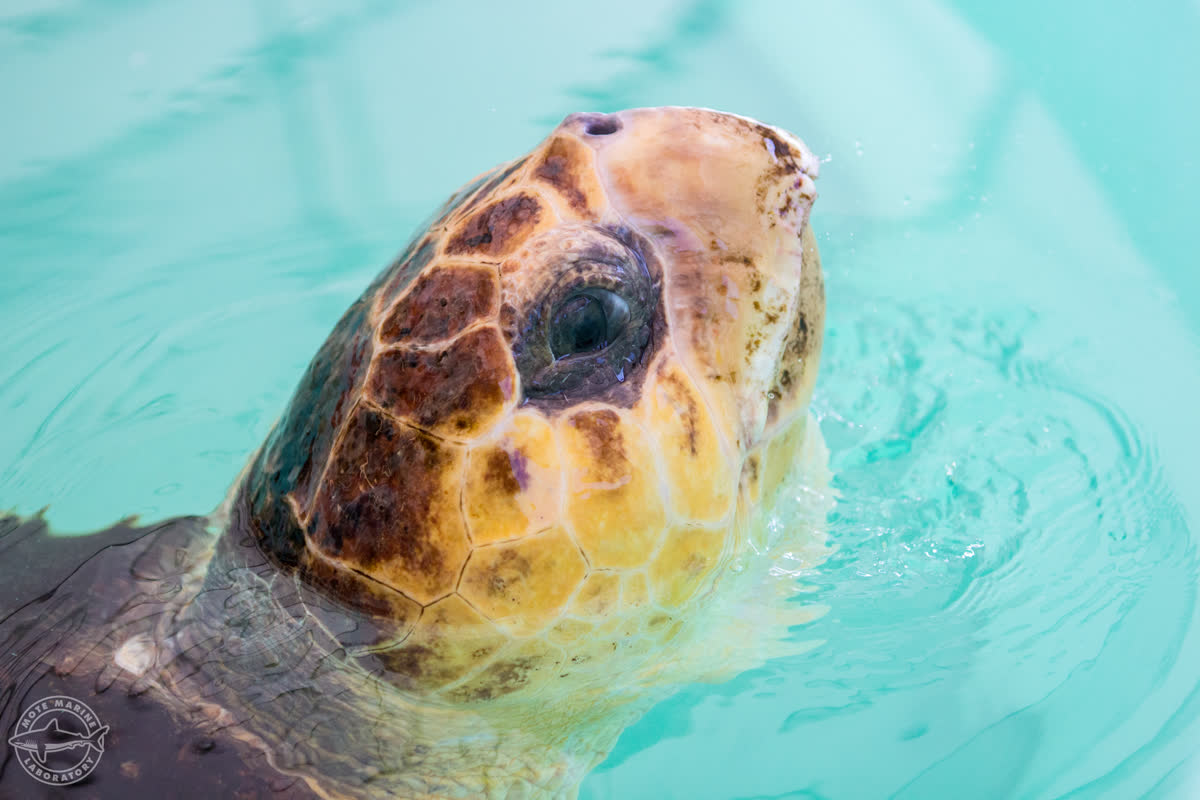
Sea Turtles
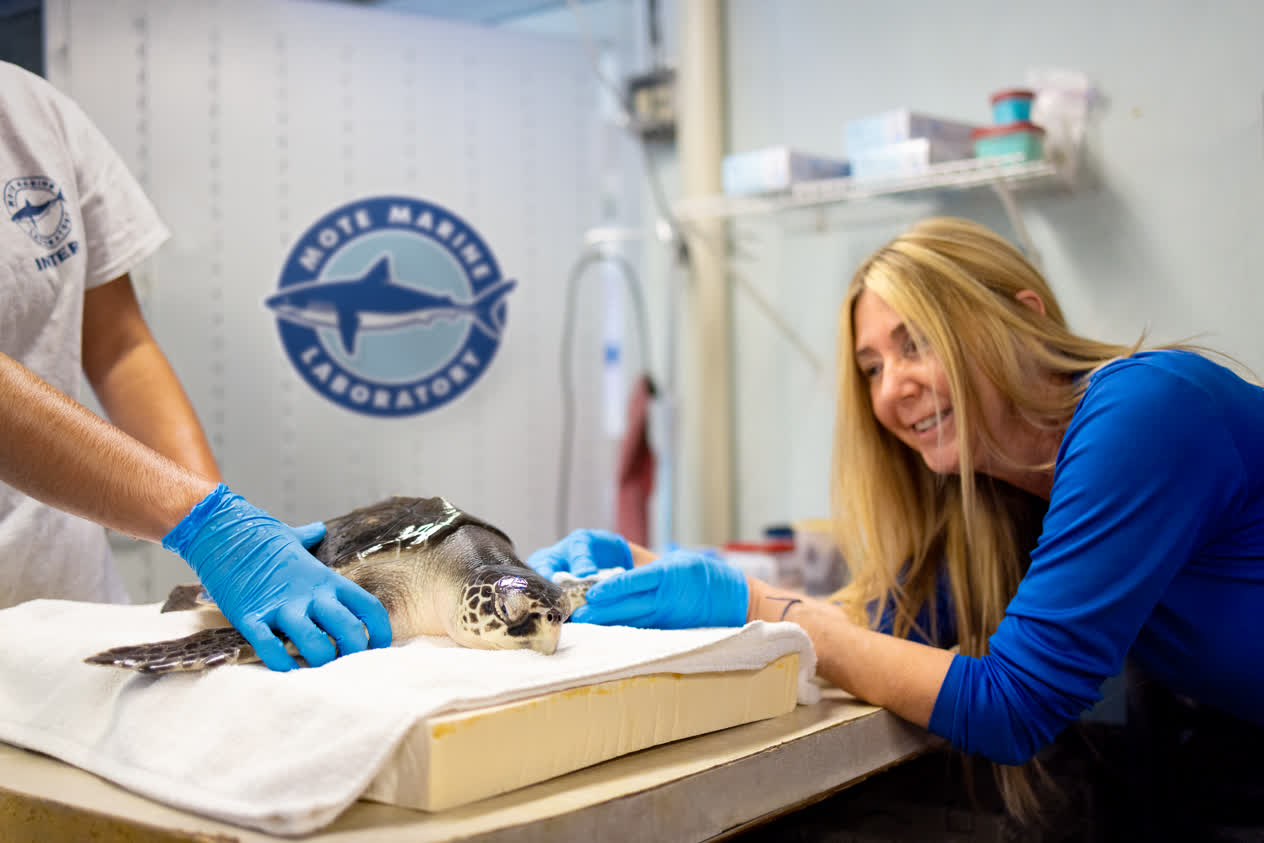
Mote has one of the few hospitals in Florida with special facilities and training to care for turtles suffering from fibropapilloma tumors.
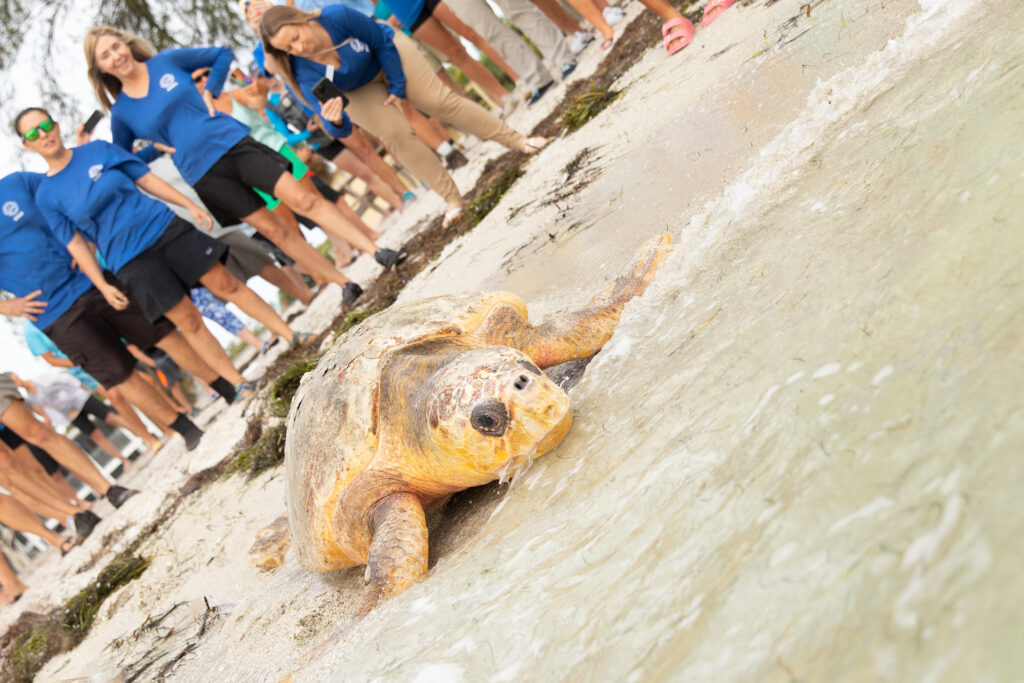
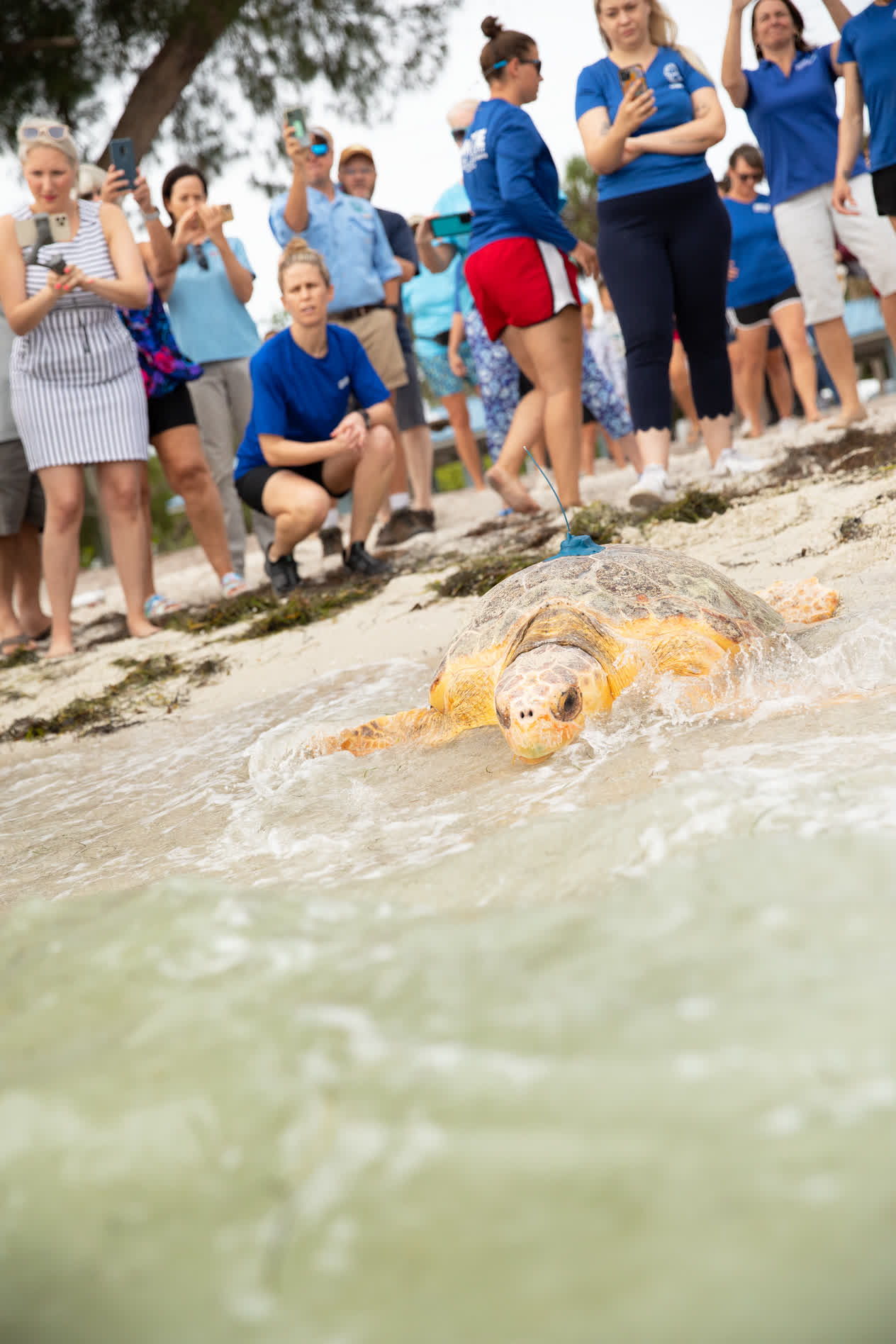
For our younger sea turtle patients, Mote operates a sea turtle hatchling hospital, where hatchlings receive vital care before being successfully returned to the ocean.
We aim to help all our turtle patients return to the marine environment and contribute to their populations for years to come. This matters greatly: All sea turtle species are threatened or endangered.
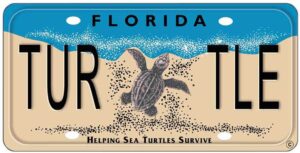
We are extremely grateful to the Sea Turtle Grants Program of the Sea Turtle Conservancy. They have awarded more than two dozen grants to Mote over the years, including for our Sea Turtle Rehabilitation Hospital and for our conservation and research efforts with sea turtles in the environment. The Sea Turtle Grants Program is funded by proceeds from the sale of the Florida Sea Turtle License Plate.
Learn more at: helpingseaturtles.org
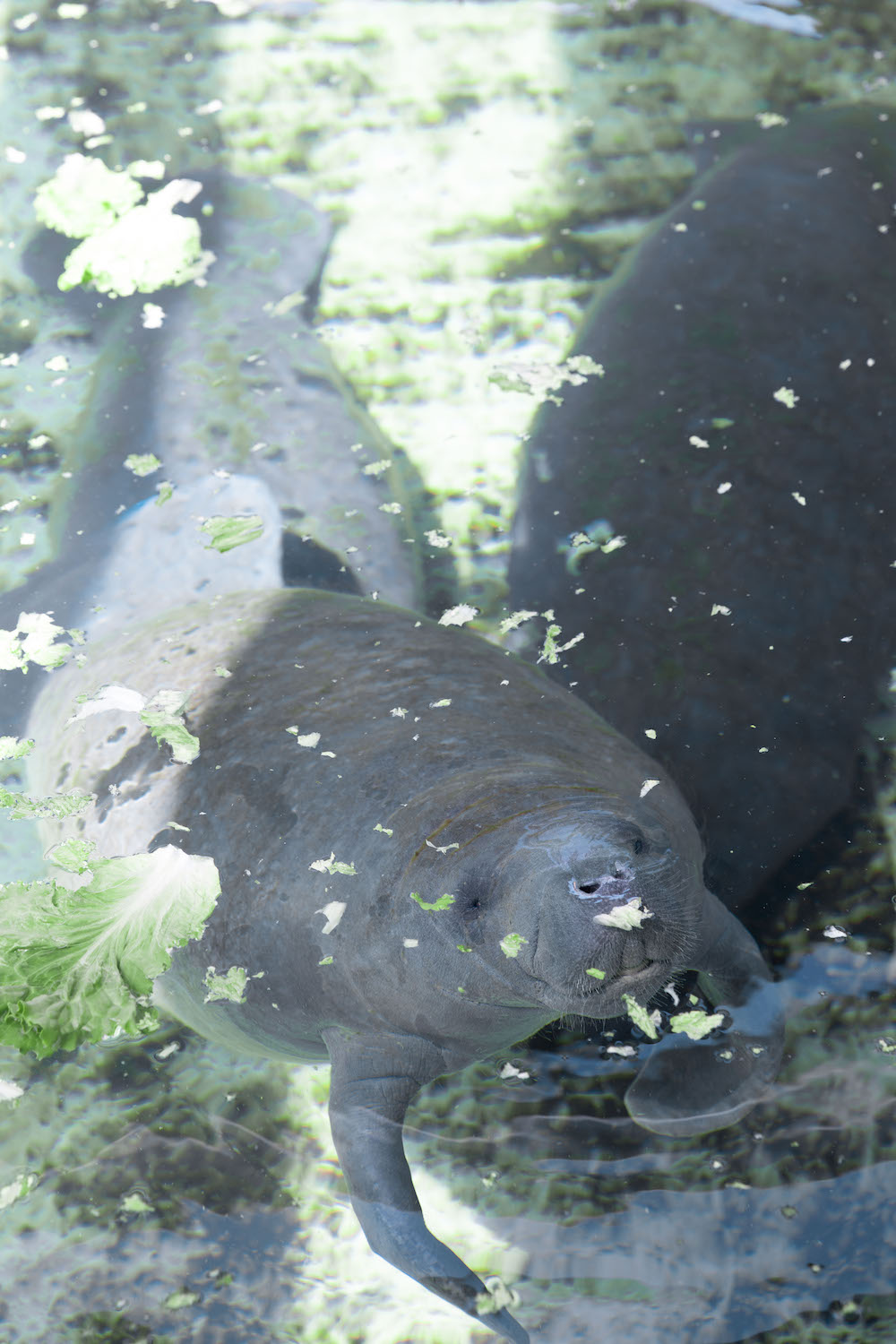
Marine Mammals
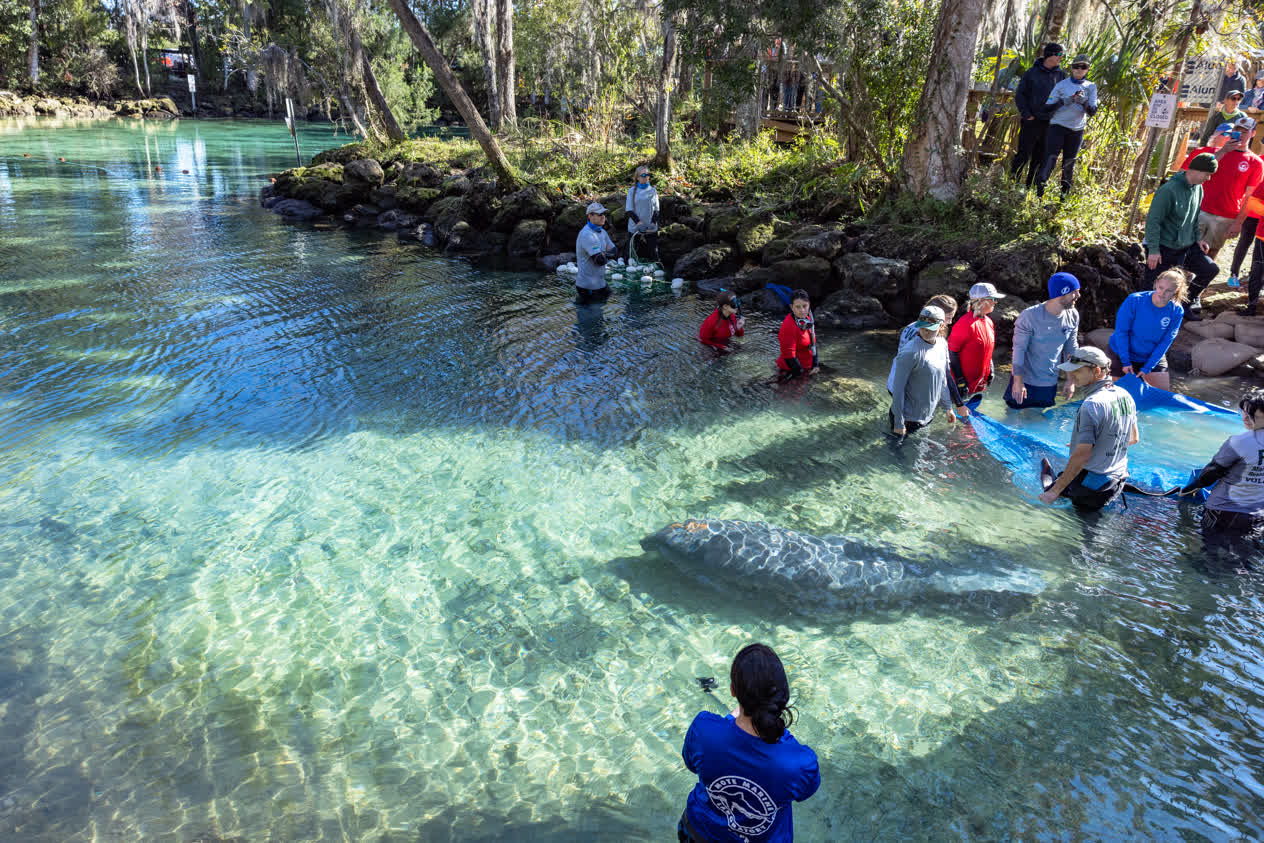
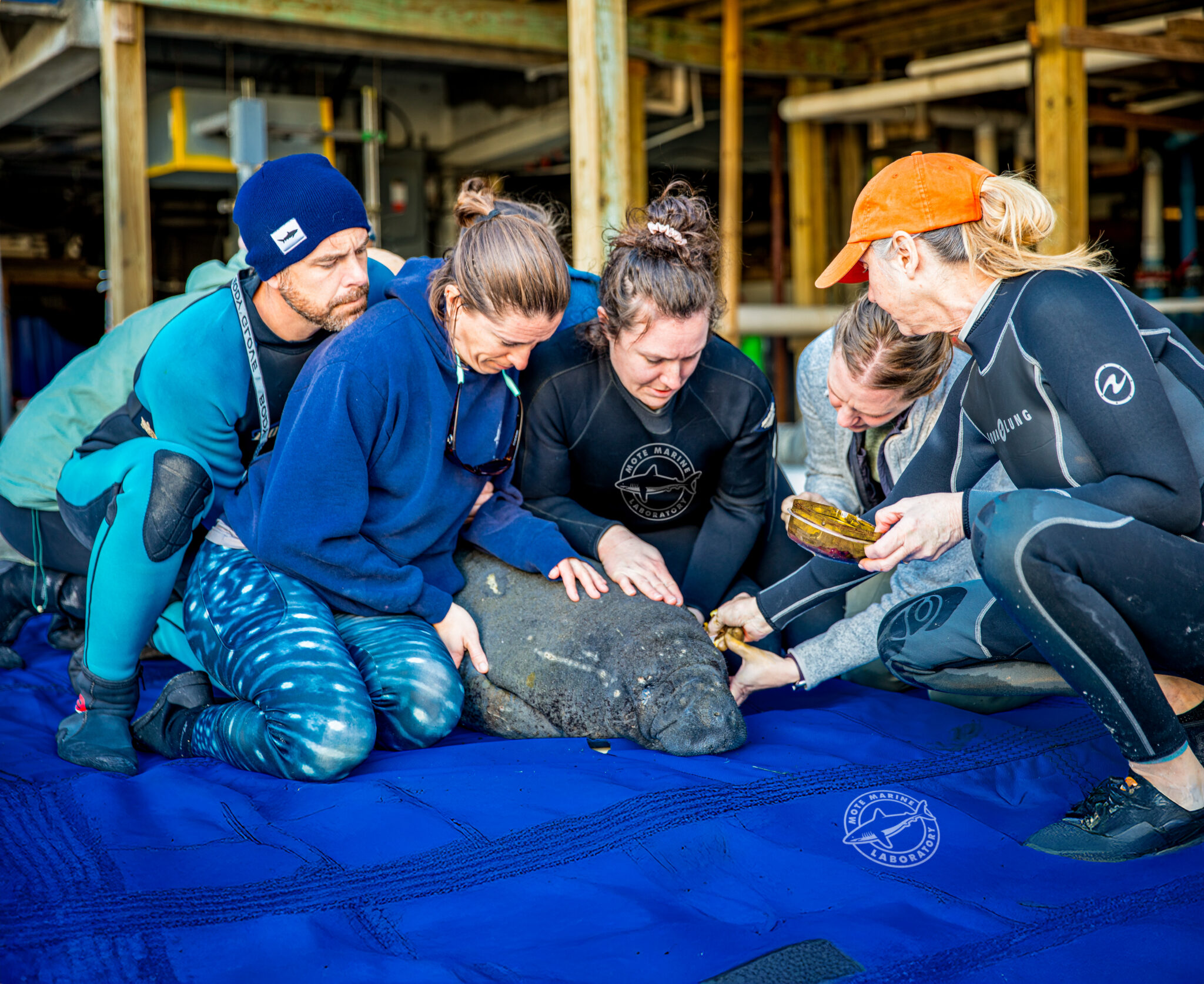
In 2025, Mote received a new designation as a secondary care holding facility for manatee rehabilitation under the direction of the U.S. Fish and Wildlife Service (USFWS) and Florida Fish and Wildlife Conservation Commission (FWC).
After rescue, injured, sick or orphaned manatees are transferred to a federally permitted acute care facility. Once medically stabilized, manatees may be transferred to a secondary care holding facility, such as Mote, for final stages of rehabilitation while awaiting release.
Over the past several years, Florida has experienced unusually high numbers of manatee mortalities, driven largely by seagrass loss, harmful algal blooms, and cold stress. Key threats placed extraordinary pressure on the state’s existing critical care centers, creating a significant need for expanded care and holding capacity. Mote’s new designation helps meet that need and supports a more robust statewide response to manatee rehabilitation and recovery efforts.
As a secondary care holding facility, Mote will provide rehabilitative care for non-critical manatee patients to improve capacity at Florida’s primary critical care centers. This expansion of care capacity is vital, as Florida manatees continue to face threats from habitat loss, boat strikes, red tide, cold stress, and entanglement or ingestion of marine debris.
Current Projects
- Immune systems effects resulting from exposure of marine vertebrates to Florida Red Tide, authorized 11/2006
- Shotgun sequencing of viruses associated with sea turtle fibropapillomatosis, authorized 1/2007
- Brevetoxin induced morbidity and mortality in stranded dolphins and sea turtles in Florida, authorized 2/2004
- Satellite tracking studies of successfully rehabilitated turtles from Mote Marine Laboratory Sea Turtle Hospital upon release to the wild, authorized 6/2006
- Implementing a husbandry training program with two captive adult loggerhead sea turtles (Caretta caretta), authorized 9/2006
- Behavioral audiogram of the loggerhead turtle (Caretta caretta), authorized 5/2007
- Auditory evoked potentials of stranded and nonreleasable sea turtles, authorized 6/2008
- Efficacy of Cholestyramine for treatment of brevetoxicosis in sea turtles, authorized 11/2008
- Effects of red tide toxin exposure on immune function of the loggerhead sea turtle, Caretta caretta, and a proposed model freshwater species, the pond slider, Trachemys scripta, authorized 2012
Grants Received
- Sara Roberts Foundation – 2014
- Floria Sea Turtle Conservation Grant – 2014
- Sea Turtle Conservancy (Sea Turtle Grants Program) – multiple years:
- Service plan for the Sea Turtle Rehabilitation Hospital Laser at Mote Marine Laboratory
- Blood chemistry instrumentation and supplies for use in the Sea Turtle Rehabilitation Hospital at Mote Marine Laboratory
- Equipment upgrades and blood chemistries for Mote Marine Laboratory’s Sea Turtle Rehabilitation Hospital
- Upgrading the Radiological Capabilities of the Sea Turtle Rehabilitation Hospital
- Increasing Surgical Capacity of the Sea Turtle Rehabilitation Hospital
- Facility Expansion for the Sea Turtle Rehabilitation Hospital
 Pharmacokinetic Study to Establish Dosage for Piperacillin in Loggerhead Sea Turtles (Caretta caretta)
- Tissue and Plasma Enzyme Activities in Loggerhead Sea Turtles (Caretta caretta)We are extremely grateful to the Sea Turtle Grants Program of the Sea Turtle Conservancy for awarding more than two dozen grants to Mote over the years, including for our Sea Turtle Rehabilitation Hospital and for our conservation and research efforts with sea turtles in the wild. The Sea Turtle Grants Program is funded by proceeds from the sale of the Florida Sea Turtle License Plate. Learn more at: www.helpingseaturtles.org
 Pharmacokinetic Study to Establish Dosage for Piperacillin in Loggerhead Sea Turtles (Caretta caretta)
Meet our Animal Patients

Additional Program Information
- Greenhow D. R, C.A. Manire, L. Byrd, D.A. Mann. Hearing thresholds in stranded mother and calf Risso’s dolphins (Grampus griseus) pre-and post-antibiotic dosage.
- Epperly, S.P., A. Nunes H. Zwartepoorte, L. Byrd, M. Koperski, L. Stokes, M. Braganca, A.D. Tucker, and C.R. Sasso. 2013. Repatriation of a Kemp’s Ridley from the Eastern North Atlantic to the Gulf of Mexico. Marine Turtle Newsletter No.136:1-2.
- Anderson, E.T., V. Socha, J. Gardner, L. Byrd, and C.A. Manire. 2013. Tissue enzyme activities in the loggerhead sea turtle (Careeta caretta). Journal of Zoo and Wildlife Medicine 44 (1):62-69.
- Manire, C.A., E.T. Anderson, L. Byrd, and D. A. Fauquier. 2013 Dehydration as an effective treatment for brevetoxicosis in loggerhead sea turtles (Caretta caretta). Journal of Zoo and Wildlife Medicine 44(2): 447-452.
- Wells, R.S., C.A. Manire, L. Byrd, D.R. Smith, J.G. Gannon, D. Fauquier, and K.D. Mullin. 2009. First records of movements and dive patterns of Risso’s dolphins, Grampus griseus, in the Gulf of Mexico and Atlantic Ocean, from a rehabilitated individual. Marine Mammal Science.
- Manire,C.A., M. Kinsel, E. Anderson, T.Clauss, and L. Byrd. Lungworm infection in three loggerhead sea turtles, Caretta caretta. Journal of Zoo and Wildlife Medicine. 2008. 39:92-98.
- Manire, C.A., L. Byrd, C.L. Therrien, and K. Martin. Mating-induced ovulation in loggerhead sea turtles, Caretta caretta. Zoo Biology. 2008. 27:213-225.
- Manire, C.A., B.A. Stacey, M. Kinsel, H. Daniels, J. Wellehan, E. Anderson, and L. Byrd . Proliferative dermatitis in two sea turtles associated with novel papillomaviruses. Veterinary Microbiology. 2007.
- Manire, C.A., C.M. Reiber, K.L. West, C. Gasper, H. Rhinehart, L. Byrd, and J. Sweeney. Blood chemistry and hematology values in healthy and rehabilitated rough-toothed dolphins, Steno bredanensis. Comparative Biochemistry and Physiology Part A. 2007.
- Manire, C.A., L. Byrd, C.L. Therrien, and K. Martin. Mating-induced ovulation in loggerhead sea turtles, Caretta caretta. Zoo Biology. 2007.
- Manire, C.A., M. Kinsel, E. Anderson, T. Clauss, and L. Byrd. In press. Lungworm infection in two loggerhead sea turtles, Caretta caretta. Journal of Zoo and Wildlife Medicine. 2007.
- Manire, C.A., K.A. Smolarek, C.H. Romero, M.J. Kinsel, T.M. Clauss, and L. Byrd. Proliferative dermatitis associated with a novel alphaherpesvirus in an Atlantic Bottlenose dolphin (Tursiops truncates). Journal of Zoo and Wildlife Medicine. 2006. 37:174-181.
- Manire, C.A., R.P. Hunter, D.E. Koch, L. Byrd, and H.L. Rhinehart. Pharmacokinetics of ticarcillin in the loggerhead sea turtle, Caretta caretta, after single intravenous and intramuscular injections. Journal of Zoo and Wildlife Medicine. 2005. 36:44-53.