
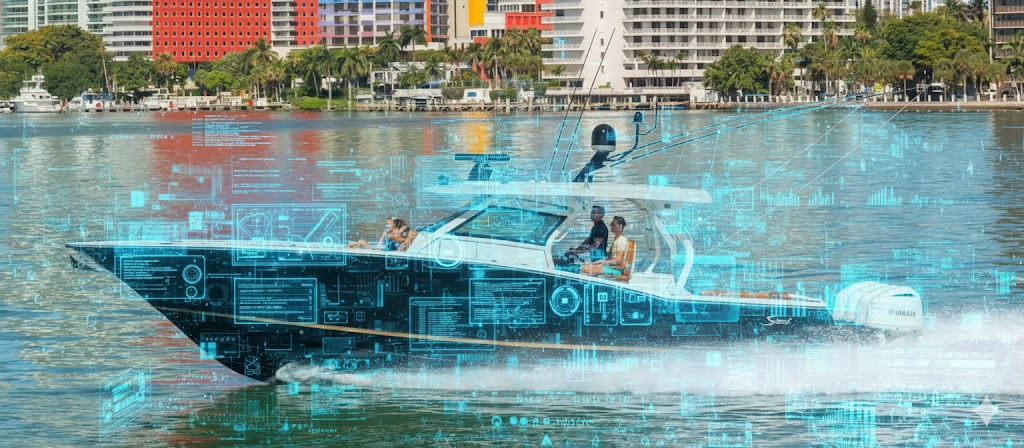
Mote Marine Laboratory’s Center for Fisheries Electronic Monitoring (CFEMM) is proud to announce the launch of a new research project to improve how recreational fishing activity is measured across the Gulf by identifying, counting, and categorizing vessels traveling through coastal passes. The project, “Improving Recreational Fishing Effort Estimates With Shore-Based Cameras,” is in collaboration with CVision AI and Environmental Defense Fund (EDF) and funded by the Gulf States Marine Fisheries Commission (GSMFC) and NOAA Fisheries.
A lack of precise, real-time data leaves resource managers making critical decisions with incomplete information—raising the risk of overfishing and economic loss. This project aims to close that gap by exploring an innovative tool, shore-based cameras paired with artificial intelligence, to aid in delivering more accurate insights into recreational fishing effort.
Fishing is a major economic driver nationwide. According to NOAA’s Fisheries Economics of the United States 2023, saltwater recreational fishing generated more than $73 billion in expenditures and contributed approximately $145.4 billion in sales impacts, driven by an estimated 204 million annual fishing trips.
The Gulf Fishery Management Council oversees 31 sought-after reef fish species caught in federal waters, including red snapper, gag grouper, and greater amberjack. While commercial catch is accurately monitored and reported through at-sea observers and dockside sampling, catch from private anglers relies on state-specific surveys, like the Florida State Reef Fish Survey or Louisiana Creel, and the federal Marine Recreational Information Program (MRIP) to estimate landings and ensure sustainable access. This project aims to examine shore-based cameras and AI technologies to help those surveys provide precise, objective data for management.
This new effort is led by CFEMM, a team at Mote that specializes in applying modern, technology-based tools that support fisheries science and management, in collaboration with CVision AI and EDF. The team will work closely with the Alabama Department of Conservation and Natural Resources, Texas Parks and Wildlife Department, and NOAA Fisheries Office of Science and Technology.
Over the next few months, camera systems will be installed in Alabama and Texas at high-traffic coastal passes. These systems will collect continuous data over the course of 18 months, offering a new way to understand when and where offshore recreational effort occurs and how it shifts over time.
“Mote’s Center for Fisheries Electronic Monitoring was created to help solve real-world monitoring challenges using practical technology and strong partnerships,” said Carole Neidig, Staff Scientist and Director of CFEMM at Mote Marine Laboratory. “This project is a great example of that mission. By combining shore-based cameras, AI, and close collaboration with our partners, we can strengthen the information available to fisheries managers and support better decision-making for Gulf fisheries.”
This initiative is one of seven Red Snapper Data Improvement Projects supported through GSMFC and NOAA Fisheries, reflecting a shared commitment to advancing the science behind sustainable fisheries management. It also builds on Mote’s broader AI research initiatives, which span cooperative research, development, and technology through large dataset aggregation across all research programs: including coral and seagrass genetic libraries, harmful algal blooms, water quality monitoring, ecotoxicology, ocean technology instrumentation, and marine mammals.
Mote Marine Laboratory & Aquarium has a nearly 70-year legacy as an independent, nonprofit, 501(c)3 global marine research and science education institution. Mote began in 1955 and flourished on the foundational pillars of “Passion, Partnership and Philanthropy” – the passion of a single researcher, Dr. Eugenie Clark, her partnership with the community and philanthropic support, first of the Vanderbilt family, later with the significant support and guidance of the William R. Mote family, and today through donations by thousands of individuals who believe in the mission of Mote.
Today, Mote has grown into ten campuses stretching from Sarasota Bay to Key West. Mote has 38 diverse world-class research programs and centers of excellence studying oceans locally and internationally, with an emphasis on positively impacting conservation and sustainable use of marine resources. Learn more at mote.org.
Environmental Defense Fund collaborates with partners in the U.S. and internationally to advance sustainable fishery management solutions that support thriving communities and healthy ecosystems. For more information visit edf.org.
CVision AI develops innovative solutions for video analysis problems, pairing extensive engineering expertise with its cloud-based analysis platform Tator to help organizations turn imagery into insights. For more information visit cvisionai.com.