
Return to Coral Biorepository Alliance Home
Mission
To create a network of coral conservation organizations and experts in support of a global coral biobank for coral restoration and research purposes achieved through standardized methods to collect and maintain live colonies and voucher coral skeletons, images and genetic samples
Why Reefs Are in Trouble
Coral reefs are degrading faster than most ecosystems on Earth, and the cause is not subtle. Decades of using fossil fuels (and other dangerous gases) have warmed and acidified the ocean, and recent modeling suggests that if emissions continue at current rates, the world’s shallow water reef building corals could face widespread mortalities and even population collapse within decades, not centuries. [1] Reducing global carbon emissions remains the most important long-term fix, but political and social progress on that front has been slow, and relief at the scale reefs need may simply arrive too late for many species. That gap between the urgency of the problem and the pace of the solution is exactly why active, hands-on conservation work is needed now, alongside the slower work of decarbonizing the global economy.
Important Conservation Actions
Marine heatwaves, ocean acidification and other anthropogenic stressors are pushing coral reefs towards collapse. Even with rapid reductions in greenhouse gas emissions, ocean warming and acidification will continue for decades. For coral reefs and other ecosystems to survive, these unprecedented challenges, they need our help. The good news is that we have the tools to help reverse this trajectory.
First, we must protect reefs where they live. Marine protected areas, pollution reduction, minimizing water runoff, and restoration programs that grow and replant corals can buy valuable time. These efforts are indispensable. But they cannot shield reefs from global warming. That reality makes the second strategy essential: conserving corals outside the ocean.
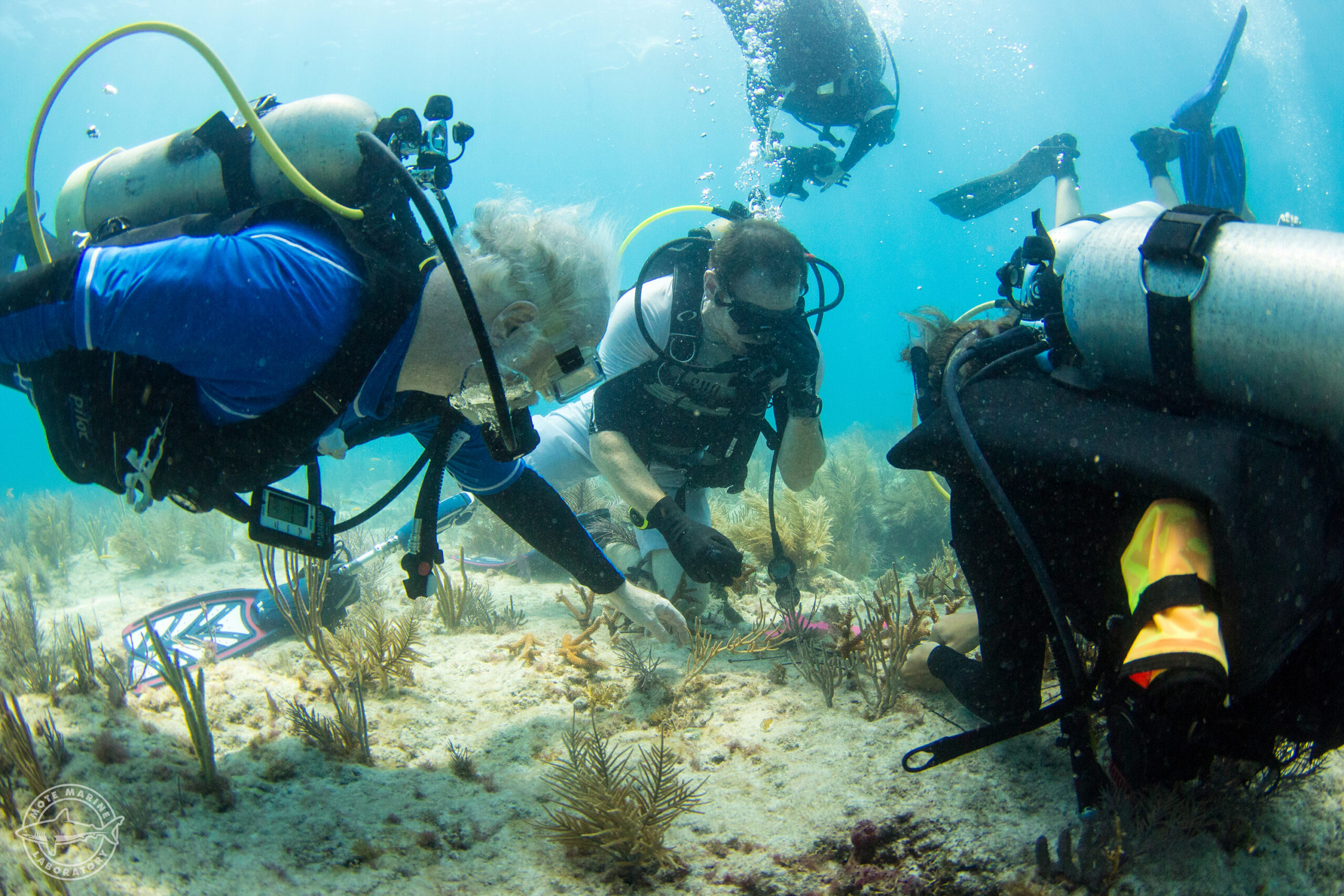
Around the world, aquariums and research institutions keep many coral species alive in human care, inducing spawning, raising larvae and returning young corals to degraded reefs. This work is a cornerstone of modern reef restoration. If reefs collapse in some regions, the ability to maintain and reproduce coral species elsewhere may determine whether recovery is possible.
But maintaining living coral collections indefinitely is expensive and inefficient. Tanks require constant filtration, lighting, temperature-control and expert staff. Over decades, and likely centuries, that burden will only grow. No conservation system that relies entirely on continuous, high-energy maintenance is truly secure in an era of climate disruption and geopolitical instability.
What a Biorepository Is and Why It Matters
We need another layer of protection – biorepositories. Biorepositories preserve living biological material, cells, sperm, eggs and tissues, at ultra-low temperatures, typically in liquid nitrogen at minus 196° Celsius. At those temperatures, biological time essentially stops, allowing genetic material to remain viable virtually indefinitely. Moreover, this should be a global network of coral biorepositories serving as an insurance policy for the ocean. Because biodiversity is distributed among nations, such a system must respect national sovereignty while encouraging international cooperation. Regional facilities across the world’s oceans could collect and store genetic material from local coral species, with redundant backups to ensure long-term security. Importantly, a global coral biorepository network is more than a sample collection or an informal gene bank. It is a “targeted, genetically diverse collection of living organisms, tissue, germplasm, or cells that is catalogued, actively managed, and financially committed to long term, secure storage for both present and future conservation and research use.” [2] That distinction matters, because a freezer of unlabeled samples or a tank of corals with no tracking system does not function the same way and cannot be relied upon decades from now.
Three Complementary Storage Approaches
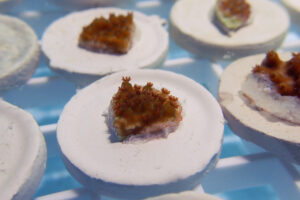
Existing coral biorepositories work through three complementary approaches. Frozen nonliving tissue samples are the simplest and cheapest to collect and store, useful for genomic and genetic analysis even though the cells themselves are no longer viable. Live coral colonies held in aquaculture are far more expensive to maintain but offer flexibility that frozen tissue cannot, since living colonies can be matured, bred, fragmented, and eventually returned to reefs. Cryopreservation sits between the two, freezing sperm, larvae, fragments, symbionts, and microbiomes in liquid nitrogen so that, although locked in stasis for years, they remain biologically alive and can later be thawed to propagate or breed. Used together, these three approaches give a conservation network redundancy that no single method can provide on its own. [2]
Why Having This Infrastructure Early Makes All the Difference
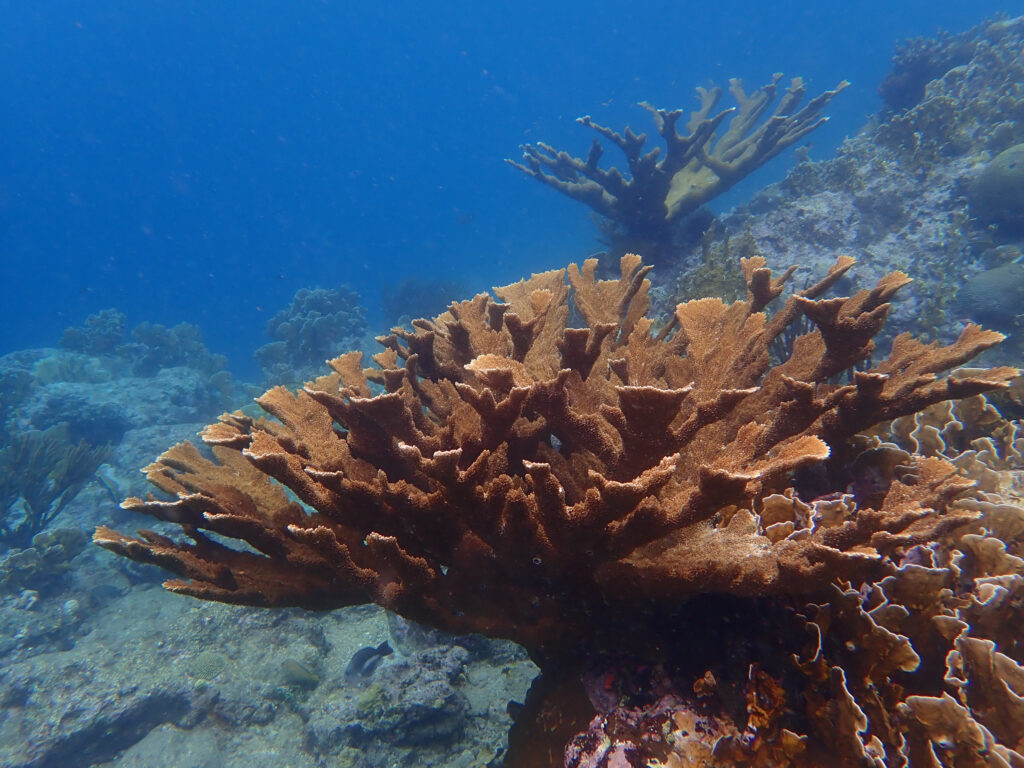
The value of having biorepository infrastructure already in place became clear in Florida. After the severe 2023 marine heat wave, the wild population of elkhorn coral (Acropora palmata) in the upper Florida Keys collapsed to approximately 23 surviving genetic individuals. [3] Fortunately, a co
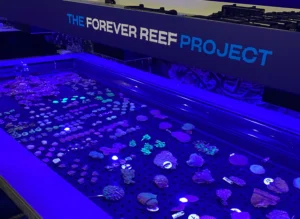
ordinated effort had already moved nearly all the known Florida genets, around 150 of them, into replicate aquaculture biorepositories before the heat wave struck. [3,4] This prompted wildlife authorities to adopt formal policy supporting genetic rescue crosses. [5] Without some biorepository path-building in advance, that recovery pathway would not have existed.
We Cannot Save All Coral Species: The Need for Prioritization
With expanded funding and coordination, conservationists could secure much of the remaining genetic diversity of reef-building corals within years. There are more than 1,000 species; we cannot save them all. Difficult decisions about priorities will be necessary. But preserving as much genetic diversity as possible would keep the door open for future restoration.
The stakes are difficult to overstate. Coral reefs support roughly a quarter of all ocean life and contribute billions of dollars annually through fisheries, tourism, and coastal protection. [6] Some populations, particularly in the Caribbean, may have only years rather than decades left before they collapse. [1] Building biorepository capacity now, while genetic diversity still exists in the wild to capture, is what gives reefs a chance to be rebuilt once the broader work of stabilizing the climate finally catches up.
Even with immediate, positive action, our oceans will still face decades of continued stress. Biorepositories are not substitutes for thriving ecosystems. They are bridges – ways to carry species across a dangerous century so that restoration remains possible on the other side. Without them, the window may close in our lifetime.

Key References
[1] IPCC. (2018). Summary for Policymakers. In: Global Warming of 1.5 degrees Celsius. An IPCC Special Report. Geneva: World Meteorological Organization.
[2] Hagedorn M, Zuchowicz N, Henley EM, Lager C, Perry R, Blackburn H, Bouwmeester J, Brunel O, Carter C, Rodriguez-Clark KM, Comizzoli P, Firchau B, Miller D, Moore J, Muller EM, O’Neil K, Quattrini AM, Zoccola D, Banaszak AT, Marhaver KL, Hobbs R, O’Brien JK, Daly J. Conservation of coral genetic diversity through a global biorepository network. BioScience. 2025;75(11):966–974. https://doi.org/10.1093/biosci/biaf117
[3] Williams DE, Nedimyer K, Bright AJ, Ladd MC. Genotypic Inventory and Impact of the 2023 Marine Heatwave on Acropora palmata (Elkhorn Coral) Populations in the Upper Florida Keys, USA: 2020–2023. NOAA Fisheries Southeast Fisheries Science Center; 2024. https://doi.org/10.25923/37c0-x182
[4] Rodriguez-Clark KM, Baums IB, Ferrie GM, Hagedorn M, et al. Population Management of Elkhorn Coral (Acropora palmata) for the Florida Palmata Population Program (F3P): Recommendations and Guidelines. Silver Spring, MD: NOAA Fisheries; 2024.
[5] Tringali MD, Gregg LM, Sheridan NE. Genetic Risk Assessment and Conservation Management for Florida Corals. Florida Fish and Wildlife Conservation Commission, Fish and Wildlife Research Institute; 2024.