Return to Coral Biorepository Alliance Home
Biographies
Dr. Mary Hagedorn
Dr. Mary Hagedorn received her Ph.D. in Marine Biology from Scripps Institution of Oceanography and is a Senior Research Scientist at the Smithsonian National Zoo and Conservation Biology Institute. She has worked in aquatic ecosystems around the world from the Amazon to Africa, has taught many university-level classes, lectures frequently to lay audiences, maintains an active laboratory with graduate students and post docs, and is a successful researcher and active grant writer. Dr. Hagedorn has created the field of coral cryopreservation and founded biorepositories around the world for coral species. Today, she is the Director of the Reef Recovery Initiative, a global coral conservation program.
Dr. Jessica Bouwmeester
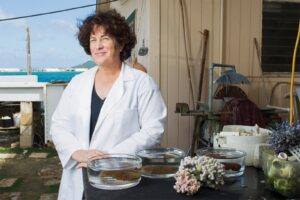
Dr. Jessica Bouwmeester is a coral reef scientist with over a decade working on Red Sea reefs and internationally across the Arabian Gulf and Pacific. Her work focuses on coral reproduction, resilience, and embedding science within large-scale restoration to guide adaptive reef management under climate change. Based in the Saudi Arabian Red Sea, she leads the science programme of the KAUST Coral Restoration Initiative and is developing a coral cryobank to secure Red Sea coral genetic resources for conservation and restoration.
Jessica.bouwmeester@kaust.edu.sa
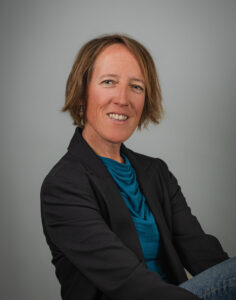
Olivier Brunel
Olivier Brunel completed a master’s degree in agriculture and animal production in 2006, with a specialization in aquaculture. In 2015, he joined the Oceanographic Institute and became the Curator / Head of the Aquarium department. Also involved in conservation topics, he manages the Rescue Center dedicated to Mediterranean wildlife such as sea turtles and conducted several programs to support local species such as seahorses, noble pen shells or groupers. Since 2022, he has been involved with the technical part of the World Coral Conservatory, a conservation program aiming to secure a large number of coral colonies in a Noah’s ark of living corals based on a worldwide network of aquariums and marine facilities.


Mike Henley
Mike Henley, PhD is a postdoctoral researcher in the Hagedorn Lab with the Smithsonian National Zoo and Conservation Biology Institute based at the Hawaiʻi Institute of Marine Biology. Prior to graduate school, he worked for 12 years as an aquarist at the National Zoo’s Invertebrate Exhibit and also taught Human Anatomy and Physiology and Coral Reef Ecology courses for 10 years at George Mason University. A graduate of the University of Hawaii’s Marine Biology program, the focus of his work involves coral reproduction, impacts to their gamete development and quality in a warming ocean, restoration strategies of coral reefs, and using cryopreservation as part of a toolkit to preserve species and genetic diversity. When he is not tending his flock of carnivorous plants, he can likely be found working as a servant for his two adorable, destructive, single brain cell cats.
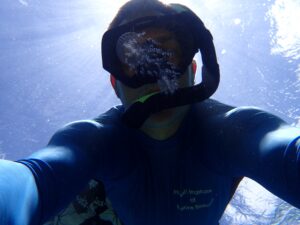
Didier Zoccola
Didier Zoccola is a molecular biologist and geneticist who has been studying the physiology of reef corals at the Centre Scientifique de Monaco for over 25 years. He is the initiator and co-coordinator of the World Coral Conservatory. This initiative is intended as a veritable “Noah’s Ark” of coral species, to support protection, adaptation and restoration actions against the impact of climate change on coral reefs.
dzoccola@centrescientifique.mc

Alison Moulding
Alison Moulding, Ph.D. works as the coral recovery coordinator at the NOAA Fisheries Southeast Regional Office, Protected Resources Division. She provides scientific support for regulatory and management actions and coordinates recovery-related activities for Caribbean coral species listed under the U.S. Endangered Species Act (ESA). With input from stakeholders such as the Acropora Recovery Implementation Team, Alison prioritizes and helps implement priority research, monitoring, conservation, and restoration actions identified in ESA recovery plans. She is also involved in developing guidance and products aimed at tracking and improving coral restoration success and coordinates a program for population management of threatened elkhorn coral in Florida.

Dr. Erinn Muller
Dr. Erinn Muller is an Associate Vice President for Research, Senior Scientist, and the Coral Health and Disease Program Manager at Mote Marine Laboratory in Sarasota, Florida. She is also the Director of Mote’s International Coral Gene Bank – a ‘Noah’s Ark’ for coral species preservation. Dr. Muller’s research focuses on identifying mechanisms that increase the resilience of coral reefs to threats such as climate change and infectious coral diseases. Dr. Muller’s primary goal is to ensure that coral species persist, and reefs thrive, for future generations.

Beth Firchau
Beth Firchau is the Program Manager of the Association of Zoos and Aquariums (AZA) SAFE (Saving Animals From Extinction) Coral Program and Coordinator of the Florida Reef Tract Rescue Program. With more than 35 years of professional zoo and aquarium experience, she is the founder of Conservation Coordination LLC, which helps zoos and aquariums develop team-based approaches to modern zoological practices, staff development, exhibit design, and conservation initiatives. Beth facilitates the Coral Biorepository Alliance (CBA), guiding the team’s collaborative work and advancing CBA leadership goals.
Dr. Dean Miller
Dr. Dean Miller is a scientist, adventurer, and award-winning filmmaker dedicated to saving the world’s coral reefs. As CEO and co-founder of Great Barrier Reef Legacy, he connects science, storytelling, and action to protect the planet’s most vital ecosystem through the Forever Reef Project, a leading initiative to collect all known 415 hard coral species on the Great Barrier Reef for their ultimate conservation and to make living fragments, tissue samples and genetic material available for reef research and restoration efforts. Dean has participated in over 300 ocean expeditions from the Arctic to Antarctica, has a PhD in coral reef management, and produced more than 50 documentaries.

Dr. Jonathan Daly
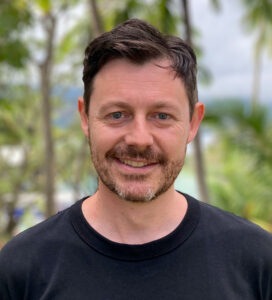
Dr. Jonathan Daly is a Conservation Biologist at Taronga Conservation Society Australia and a Senior Research Fellow at the University of New South Wales. He has worked on cryopreservation in aquatic species for over 20 years and leads biorepository development for corals on the Great Barrier Reef. His research is on the development, upscaling, and implementation of cryopreservation technologies and the establishment of biorepository systems and processes in Australia and internationally.