Return to Coral Biorepository Alliance Home
History of the Coral Biorepository Alliance
Why It Was Needed
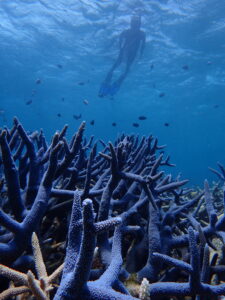
Coral reefs cover less than 0.2% of the ocean floor yet support more than 25% of all marine life and the livelihoods of over 800 million people. Climate science made clear that 70 to 90 percent of warm-water reefs would be lost even under the most optimistic warming scenario [1]. By the mid-2010s, researchers worldwide recognized that protecting reefs would require actively saving coral genetic material before entire species disappeared from the ocean.
Early Groundwork (2016 to 2020)
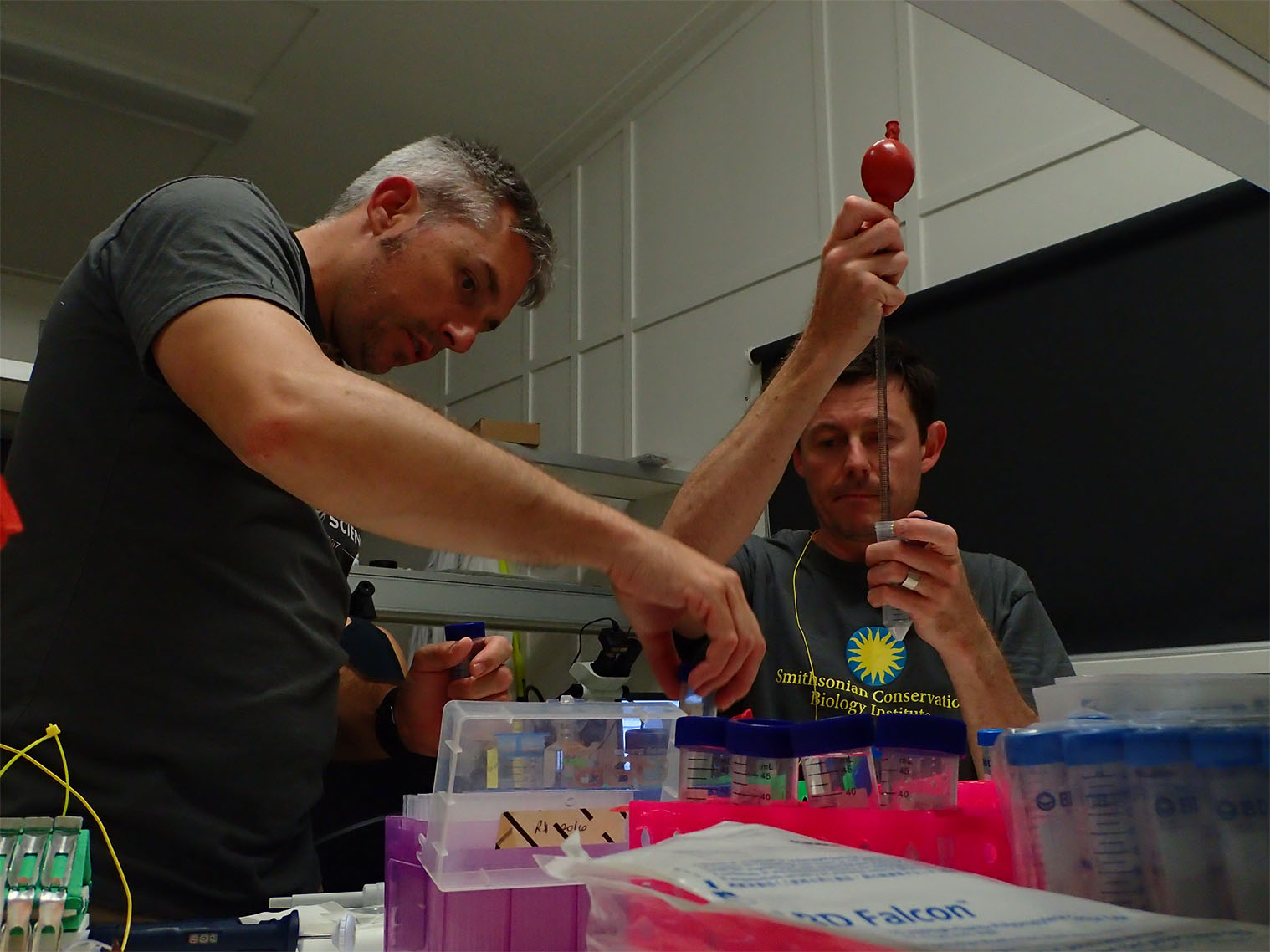
Two efforts took shape independently and almost simultaneously. In Hawaii, scientists at the Smithsonian Institution spent years developing methods to freeze and later revive coral sperm, larvae, and tissue at ultra-low temperatures, proving that preserved material could produce living coral offspring. In Monaco, a separate group launched the World Coral Conservatory concept at the 2016 International Coral Reef Symposium in Honolulu, aiming to use the global network of public aquariums to maintain living coral collections and supply material for research [2]. The Centre Scientifique de Monaco, which had maintained coral cultures since 1990, became the scientific hub of that effort. Both communities arrived at the same conclusion through different routes: living collections and frozen repositories must work side by side.
Founding the Alliance (December 2021)
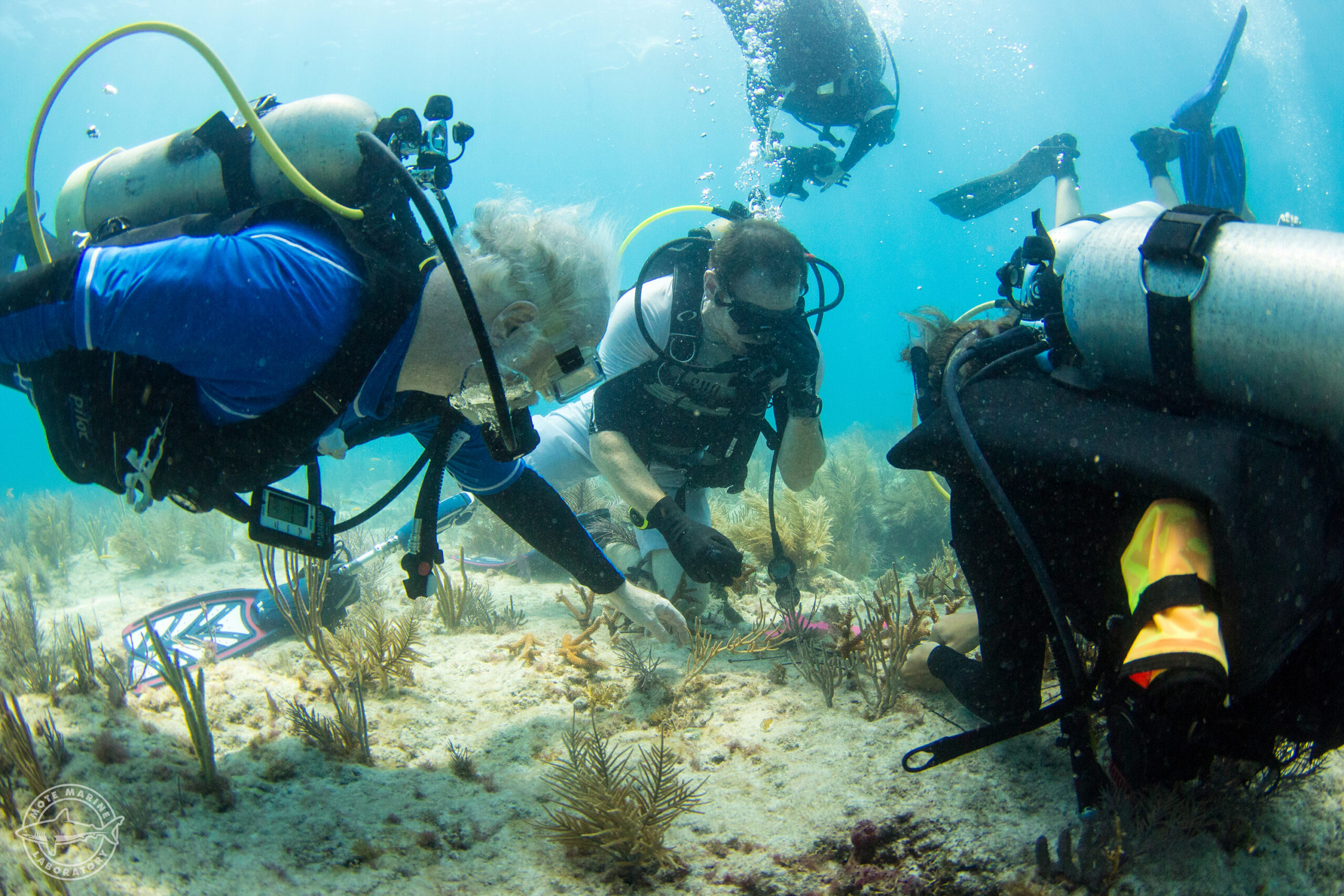
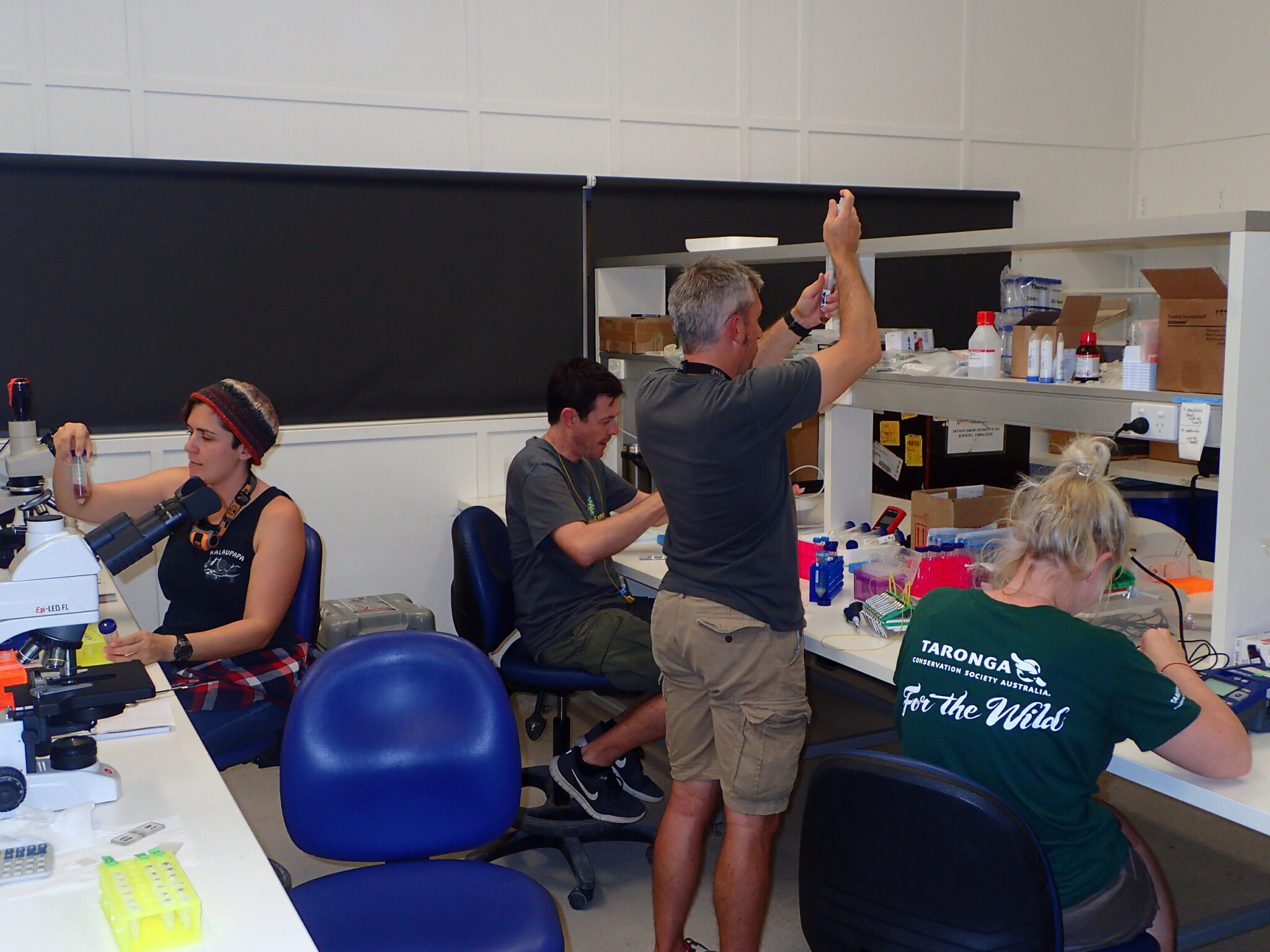
The Coral Biobank Alliance (CBA) was formally established in December 2021 when eight organizations signed a founding agreement: the Association of Zoos and Aquariums SAFE Atlantic Corals Program, the Centre Scientifique de Monaco, the Institut Oceanographique de Monaco, the Great Barrier Reef Legacy Project, Mote Marine Laboratory, the National Oceanic and Atmospheric Administration, the Smithsonian’s National Zoo and Conservation Biology Institute and the Taronga Conservation Society Australia. Together they committed to a shared global network dedicated to preserving all coral species through three approaches: living aquarium collections, frozen repositories, and skeletal archives for species identification and research. They meet on a regular basis to strengthen their organization structure and jointly develop standardized protocols.
Growth and Key Achievements (2022 to 2025)
Member organizations built the most comprehensive coral conservation inventory assembled anywhere, with roughly 250 coral species held in living collections and more than 55 in cryopreserved storage. The Alliance conducted a broad strategic review with 40 participants from 11 countries and held its first in-person gathering at the 2024 Reef Futures Conference in Puerto Morelos, Mexico. In 2025, the Great Barrier Reef Legacy team completed genomic sequencing of 197 hard coral colonies, generating over 1.5 billion sequence reads and approximately 500 gigabytes of high-quality genetic data. That same year, the Alliance published its consolidated scientific framework in the journal BioScience, authored by more than 20 researchers across four continents [3].
Path Forward
The CBA is one of the largest collectives of biorepository experts in the world encompassing most fields of knowledge, from ex situ coral collections and husbandry to global facilitation and cryopreservation, needed to help coral reefs thrive in the future. After six years operating informally under the Smithsonian, the CBA is now working toward becoming a permanent, independent organization with expanded membership. Our goal is to create a durable, self-sustaining platform for coral biorepository science that outlasts any single institution’s funding cycle and makes the knowledge base freely accessible to the global conservation community.
Key References
[1] IPCC. (2018). Summary for Policymakers. In: Global Warming of 1.5 degrees Celsius. An IPCC Special Report. Geneva: World Meteorological Organization.
[2] Zoccola D, Ounais N, Barthelemy D, Calcagno R, Gaill F, Henard S, Hoegh-Guldberg O, Janse M, Jaubert J, Putnam H, Salvat B, Voolstra CR, and Allemand D. (2020). The World Coral Conservatory (WCC): A Noah’s ark for corals to support survival of reef ecosystems. PLOS Biology 18(9): e3000823. https://doi.org/10.1371/journal.pbio.3000823
[3] Hagedorn M, Zuchowicz N, Henley EM, Lager C, Perry R, Blackburn H, Bouwmeester J, Brunel O, Carter C, Rodriguez-Clark KM, Comizzoli P, Firchau B, Miller D, Moore J, Muller EM, O’Neil K, Quattrini AM, Zoccola D, Banaszak AT, Marhaver KL, Hobbs R, O’Brien JK, and Daly J. (2025). Conservation of coral genetic diversity through a global biorepository network. BioScience 75(11): 966-974. https://doi.org/10.1093/biosci/biaf117


Biorepository or Rescue Aquaculture: Why the Difference Matters
Two Different Things, Often Confused
Not every coral living in a tank today got there the same way. The field has begun using the phrase “saving corals” to describe two genuinely different activities: rescue aquaculture and biorepositories. They can work together but treating them as interchangeable creates false confidence about what has actually been secured, and draws funding away from the sustained infrastructure that a real biorepository requires.
What Rescue Aquaculture Is
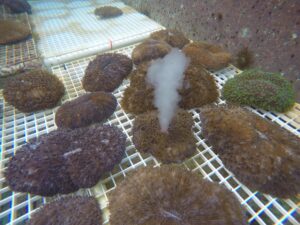
Rescue aquaculture is a rapid emergency response. When a disease outbreak or a severe heat wave threatens a reef population, field teams act quickly to remove apparently healthy colonies using practical criteria such as colony size and visible health. Florida’s Coral Rescue effort, underway since 2018 in response to stony coral tissue loss disease, is the most visible example [1]. A similar race unfolded in 2023 when a marine heat wave reduced wild elkhorn coral (Acropora palmata) populations in the Upper Florida Keys to approximately 23 surviving genetic individuals [2]. Corals were placed wherever space existed in partner facilities, often before long-term housing or detailed data plans were finalized. None of this is a criticism. Rescue aquaculture is frequently the only barrier between a population and outright loss, and the urgency driving it is real.
Another example highlighting the value of ex situ conservation is the endemic coral species, Ctenella chagius from the British Indian Ocean territory. This extremely rare reef-building coral was feared to have gone extinct following a severe mass bleaching even. However, in 2020, an expedition led by the University of Oxford in 2020, in collaboration with Horniman Museum and Gardens and the World Coral Conservation rediscovered surviving colonies, brought them into human care and they are now breeding.
What a Biorepository Is
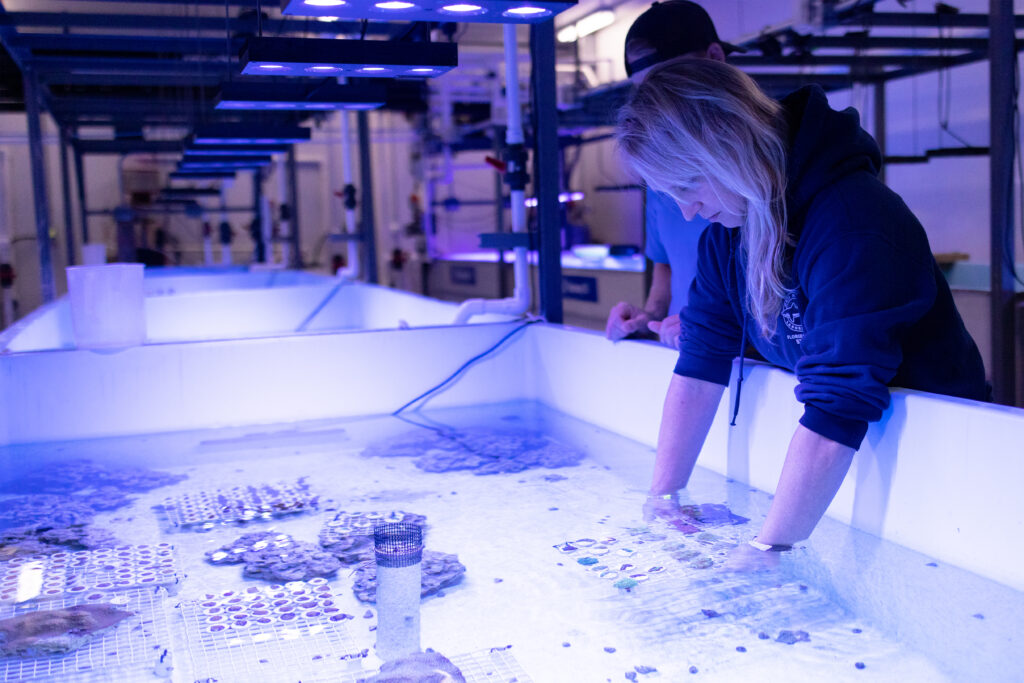
A biorepository is a planned, long-term system built before a crisis forces decisions. Hagedorn et al. (2025) define it as “a targeted, genetically diverse, ex situ collection that is actively managed, catalogued, and financially committed to long-term, secure storage for both present and future conservation and research use” [3]. That definition carries real weight. It means species and population priorities are set before collection rather than improvised under pressure. It means governance and consent processes are worked out with Indigenous communities and regulators in advance. It means population genetics determines how many individuals of each species are needed to retain meaningful diversity. And it means three complementary storage methods are integrated: living aquarium colonies, cryopreserved sperm and larvae, and skeletal voucher archives. Reaching meaningful genetic targets across many coral species can take 15 to 25 years [3], which is why a biorepository depends on sustained, multi-year institutional funding rather than short-term emergency grants.
How the Two Can Work Together: The Elkhorn Coral Case
The Florida elkhorn coral situation shows how rescue and biorepository work can connect rather than compete. Colonies were first removed from the water under emergency conditions in 2023 [2]. The NOAA Florida Palmata Population Program then organized those colonies into replicate, standardized aquaculture biorepositories at coordinated facilities [4]. Cryopreserved sperm was paired with those live colonies for assisted gene flow, producing many hundreds of new genotypes [3,5]. Wildlife authorities subsequently rolled out formal policy promoting the creation of genetic rescue offspring by crossing Florida eggs with cryopreserved sperm from carefully selected populations elsewhere [6]. The emergency response got most of the corals out of the water in time. The biorepository framework that is emerging is what gave that action lasting scientific and conservation value.

Why This Distinction Matters for Funders and Decision-Makers
Funding a rescue addresses a real and immediate need, but it is not a substitute for funding the governance, standardization, and durable infrastructure a true biorepository requires. Corals collected under crisis conditions retain limited long-term conservation value unless they are deliberately folded into a properly managed system afterward. A rescue is an entry point into conservation, not the endpoint of it.
Key References
[1] Florida Fish and Wildlife Conservation Commission. Florida Coral Rescue. https://myfwc.com/research/habitat/coral/rescue/ (accessed June 2026).
[2] Williams DE, Nedimyer K, Bright AJ, Ladd MC. Genotypic Inventory and Impact of the 2023 Marine Heatwave on Acropora palmata (Elkhorn Coral) Populations in the Upper Florida Keys, USA: 2020-2023. NOAA Fisheries Southeast Fisheries Science Center; 2024. https://doi.org/10.25923/37c0-x182
[3] Hagedorn M, Zuchowicz N, Henley EM, et al. Conservation of coral genetic diversity through a global biorepository network. BioScience. 2025;75(11):966-974. https://doi.org/10.1093/biosci/biaf117
[4] Rodriguez-Clark KM, Baums IB, Ferrie GM, Hagedorn M, et al. Population Management of Elkhorn Coral (Acropora palmata) for the Florida Palmata Population Program (F3P): Part II, Recommendations and Guidelines. National Oceanic and Atmospheric Administration; 2024.
[5] Hagedorn M, Page CA, O’Neil KL, et al. Assisted gene flow using cryopreserved sperm in critically endangered coral. Proc Natl Acad Sci USA. 2021;118(38):e2110559118. https://doi.org/10.1073/pnas.2110559118
[6] Tringali MD, et al. Genetic Interventions for Florida’s Acropora palmata. Florida Fish and Wildlife Conservation Commission, Fish and Wildlife Research Institute; 2024.