Skip to content
You are using an outdated browser. Please upgrade your browser to improve your experience.
Mote Aquarium on City Island, Sarasota, is closed to visitors as we turn our full attention toward preparing to open Mote Science Education Aquarium (Mote SEA).
FAQ about Mote SEA
Search Results
130 results for ‘Climate Change’
The Marine Microbiology Program studies microscopic living things (called microorganisms or microbes), their roles in the marine environment and their ability to produce natural products that can benefit marine animal and human health.
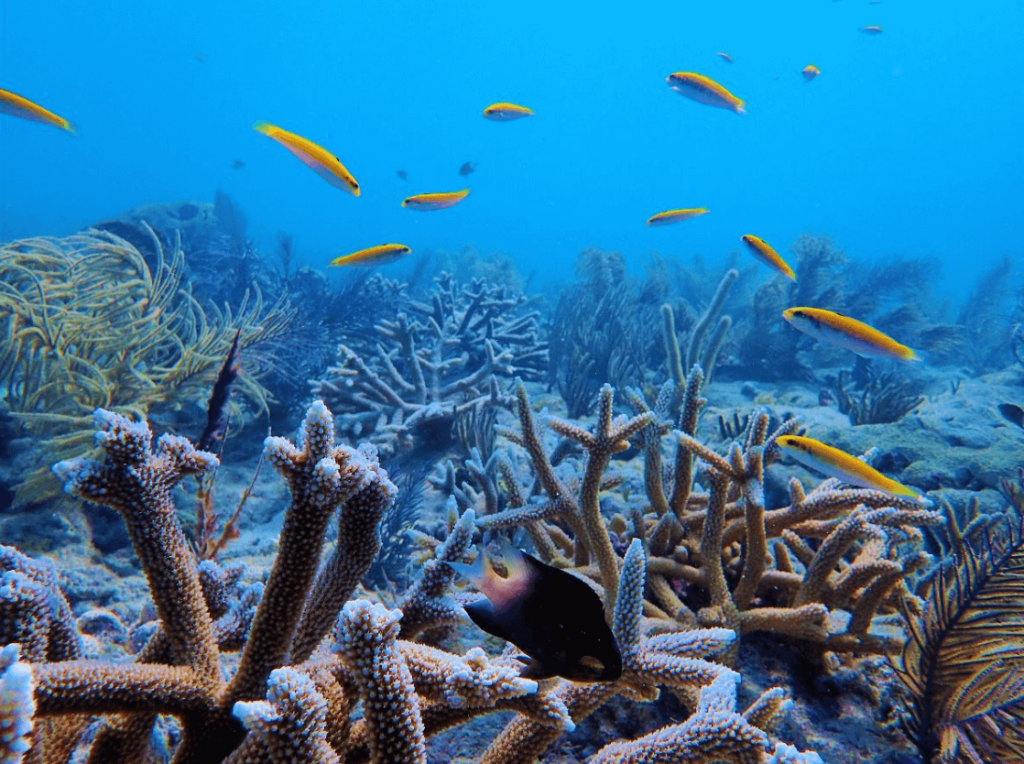
Several stressors including climate change and infectious diseases have caused significant losses in living coral, particularly in Florida, leading to ecosystems on the brink of functional extinction. ...
Mote Marine Laboratory scientists have restored more than 216,000 corals to Florida’s Coral Reef—an exciting milestone. Starting in 2020,...
The ELF lab explores a range of organismal and environmental health issues. Over the past 18 years, the ELF lab has been funded over $6.5 million to carry out oil spill and industrial contaminant pollution research, nationally and...
The mission of the Ecotoxicology Research Program is to investigate the source, fate and effects of toxic substances in the environment, including natural biotoxins (harmful...
Worldwide, oceans absorb about one-third of all the excess carbon dioxide in the atmosphere, which can lead to a reduction in pH and dramatic shifts in seawater carbonate chemistry. Studies have shown that ocean water is more acidic...
About This Campus
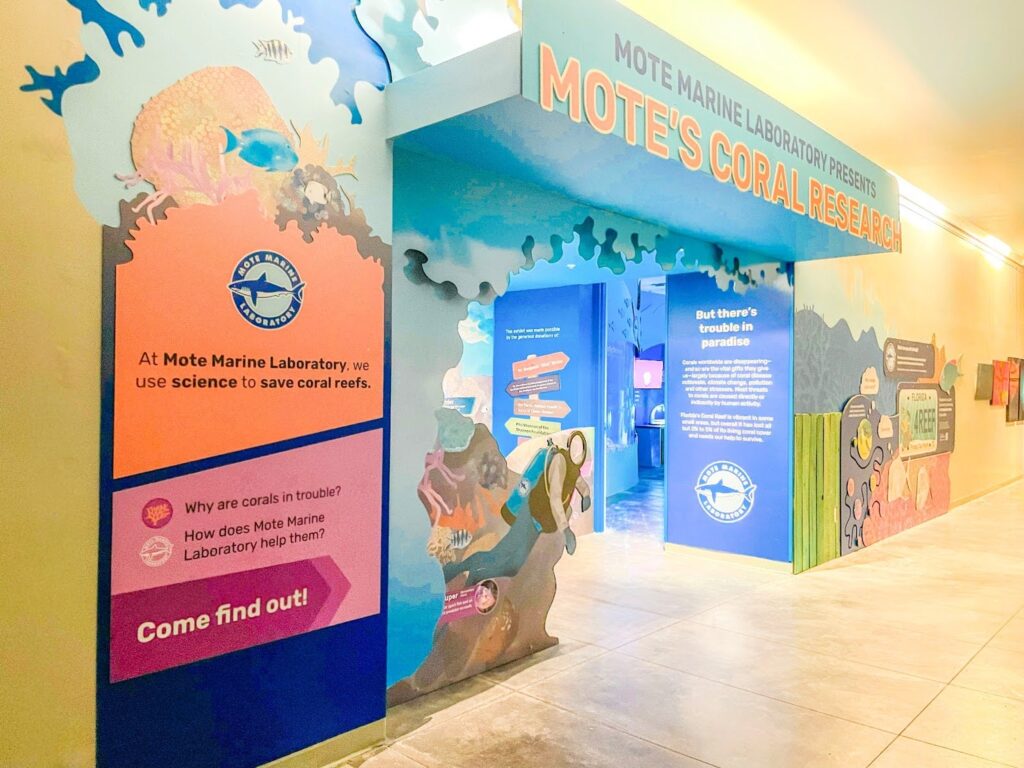
To educate and involve visitors in the protection and conservation of coral reef ecosystems, Mote Marine Laboratory has teamed up with NOAA and their partners to create Mote’s...
Florida’s Coral Reef experienced record-breaking heat waves during the summer of 2023 caused by unusually high seawater temperatures that started early in the season, resulting in mass coral bleaching in certain areas. Florida’s...
Mote Marine Laboratory is pleased to announce it was awarded nearly $7 million from the National Oceanic and Atmospheric Administration (NOAA) for a four-year, multi-faceted project focused on implementing a holistically transformative...
Mote Marine Laboratory & Aquarium is partnering with the University of Maryland Center for Environmental Science (UMCES) in a new $7.5 million grant from NOAA to lead an innovative U.S. Harmful Algal Bloom Control Technologies...
Fishing, a $200-billion industry in the United States, provides millions of jobs and sustenance. Newest Mote Research Technician in the Center for Fisheries Electronic Monitoring at Mote (CFEMM), Katie Harrington, is working to ensure...
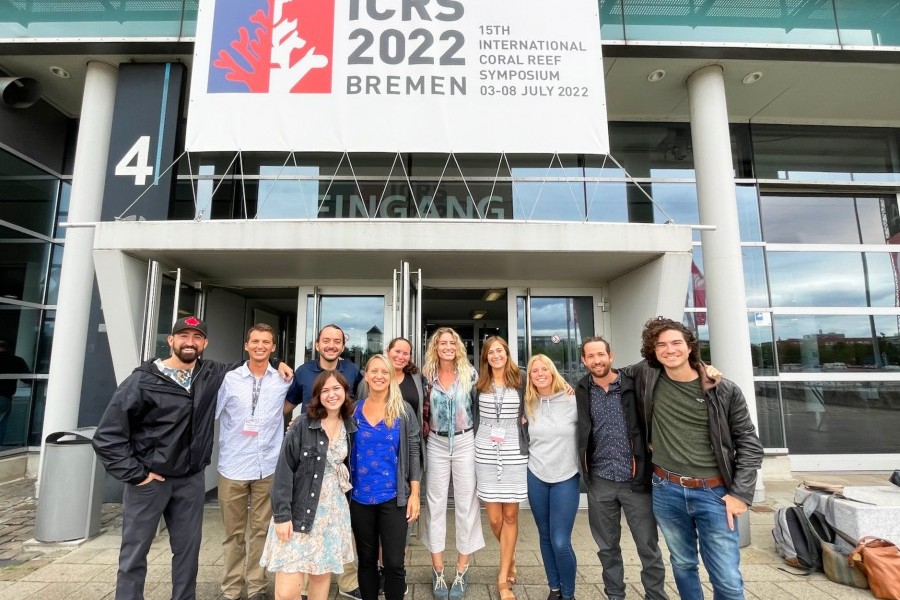
Cutting-edge coral reef research took the spotlight this week as six Mote Marine Laboratory scientists and their Mote-affiliated peers presented their latest discoveries during the 15th International Coral Reef Symposium (ICRS) in...
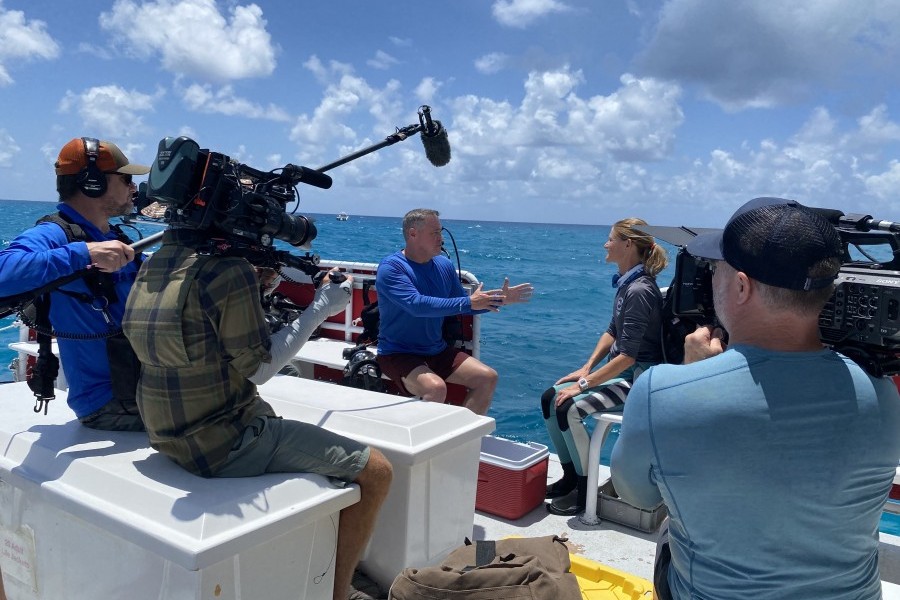
Mote's coral reef restoration and research efforts will be featured on the nationally syndicated show, Wildlife Nation, featuring host Jeff Corwin and presented by Defenders of Wildlife. The episode, "Crocs and Corals", features stories...
As ocean habitats around the world face threats such as climate change, overfishing, pollution, and more, Marine Protected Areas (MPAs) can provide sanctuary to threatened populations and vital ecosystem services. However, even given...
Mote’s coral restoration efforts featured in National Geographic...
This story is a highlight from our 2020 Annual Report.
TURNING THE (RED) TIDE WITH A GAME-CHANGING INITIATIVE
As Gulf of Mexico communities...
This story is a highlight from Mote's 2020 Annual Report.
SUSTAINING FISHERIES—GLOBAL SPOTLIGHT ON MOTE
In November 2019, Mote...
This story is a highlight from our 2020 Annual Report.
CORAL RESTORATION: BREAKTHROUGHS & BABIES
In August 2020, years...
This story is a highlight from Mote's 2020 Annual Report.
NO SHUTDOWN FOR MARINE LIFE
In 2020, COVID-19 interrupted life as we know...
This story is a highlight from Mote's 2020 Annual Report.
NO SHUTDOWN FOR MARINE LIFE
In...
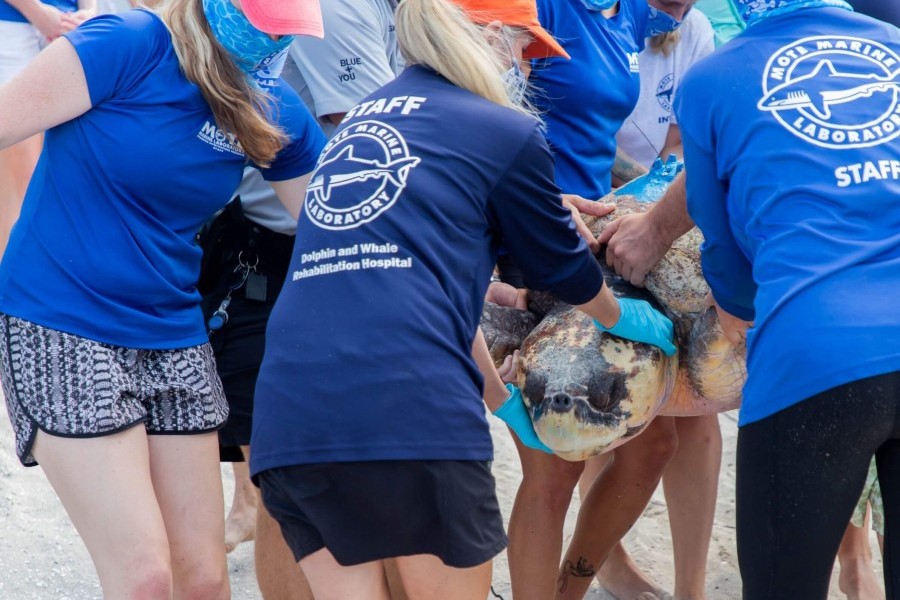
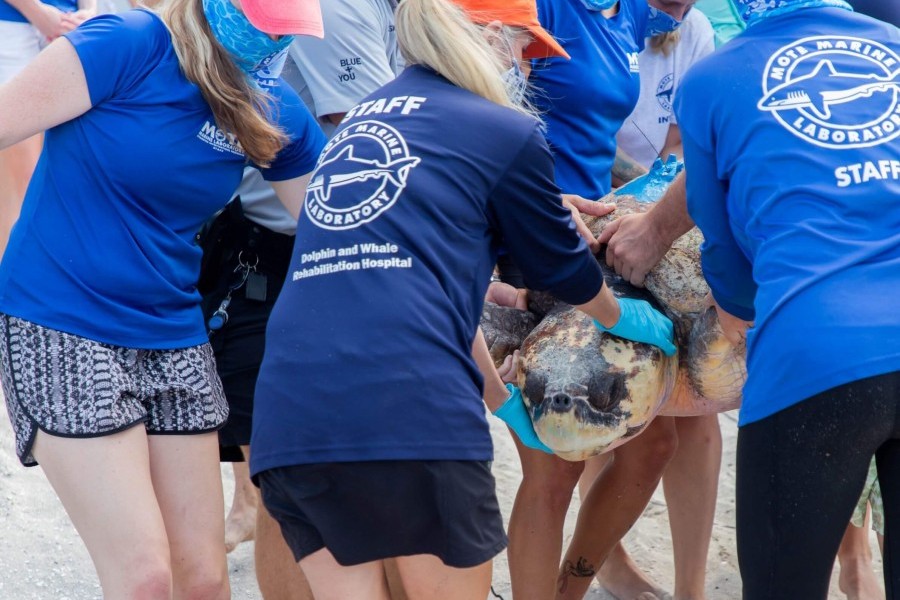
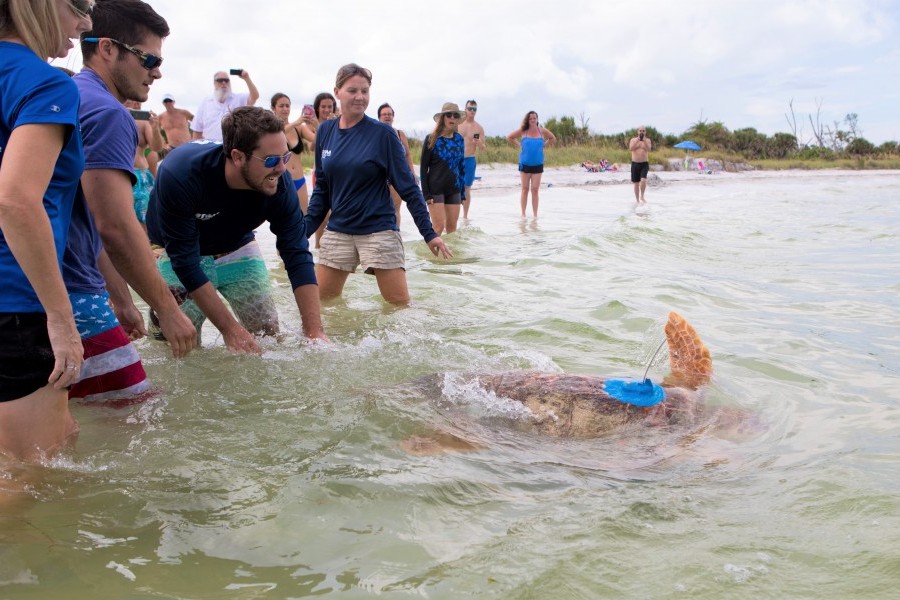
Male sea turtles are notoriously difficult to study: Once a male hatchling leaves the nest, there is no reason for him to return to the shore. Therefore, one of the few chances to study males up-close is when they need to be rescued...
June 8, 2020 – At a press conference earlier today in Islamorada, Mote Marine Laboratory & Aquarium announced plans for future development to further coral reef research and restoration in the Florida Keys and...
New research on stony coral tissue loss disease reveals similar “bacterial signatures” among sick corals and nearby water and sediments for the first time. Results hint at how this deadly disease might spread, and which bacteria...
PHOTO BELOW: NESTING LOGGERHEAD TURTLE (MOST LOGGERHEADS NEST AT NIGHT, AND DAYTIME SIGHTINGS ARE RARER). CREDIT: MOTE MARINE LABORATORY. MOTE'S SEA TURTLE ACTIVITIES ARE CONDUCTED UNDER FWC MARINE...
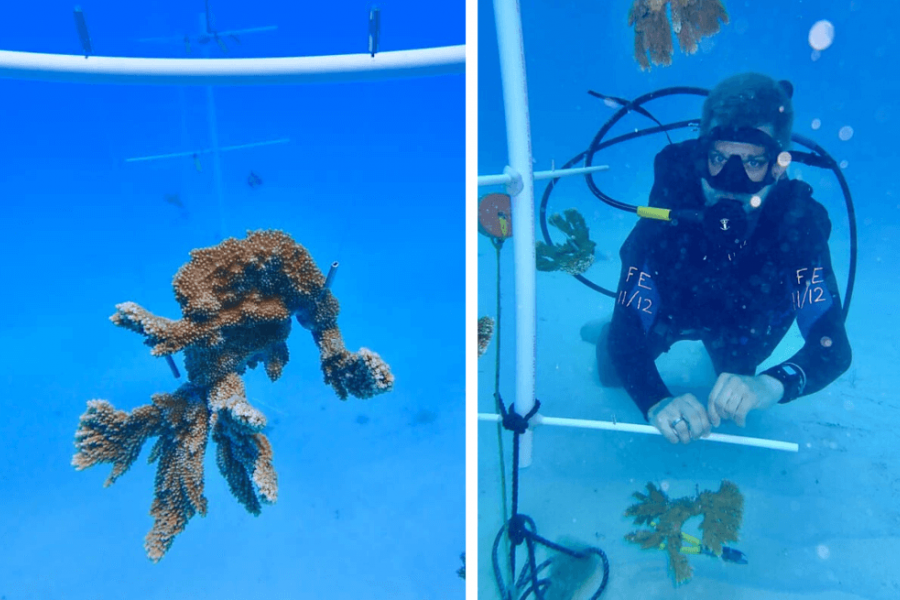
Mote Marine Laboratory scientists are launching a new, underwater spawning nursery for elkhorn coral, with the goal of strategically breeding and restoring this rapidly declining, native species that is at risk of disappearing from...
Mote Marine Laboratory’s President & CEO joined Florida’s Governor, state agency leaders and partners at all levels to raise awareness for coral reefs on Jan. 30 in Miami, where Mote’s traveling exhibit Sanctuary Reef was...
Florida’s coral reefs have enough problems—unprecedented levels of coral disease, climate change, pollution and hurricanes—without struggling to reproduce sexually. But struggle they do.
As environmental stress grows and coral...
October 8, 2019 — Recognizing the critical need for healthy oceans, Enzymedica is devoting a portion of the sales of its new Aqua Biome fish oil supplements to Mote Marine Laboratory & Aquarium’s vital coral...
With strategic support from the Jacksonville, Florida-based Arthur Vining Davis Foundations, Mote Marine Laboratory & Aquarium is continuing to push forward with its vital coral research and...